Section 8 Vouchers 2026: Application, Eligibility, and Future Changes

The pursuit of affordable and stable housing remains a critical challenge for millions across the United States. The Housing Choice Voucher Program, commonly known as Section 8, stands as a cornerstone of federal efforts to address this need. As we look towards 2026, it’s essential for current and prospective applicants to understand the potential landscape of Section 8 Vouchers 2026, including application processes, eligibility requirements, and any anticipated programmatic shifts. This comprehensive guide aims to demystify the complexities of the Section 8 program, offering clarity and strategic advice for navigating housing assistance in the coming years.
Understanding the Section 8 Program: A Foundation for 2026
The Section 8 Housing Choice Voucher Program, administered by the U.S. Department of Housing and Urban Development (HUD) through local Public Housing Agencies (PHAs), provides rental assistance to low-income families, the elderly, and disabled individuals. The program allows participants to find their own housing in the private market, including single-family homes, townhouses, and apartments. The voucher then subsidizes a portion of their rent, making housing more affordable. The family typically pays 30% of their adjusted gross income for rent and utilities, with the PHA covering the remaining amount up to a certain limit.
The core philosophy behind Section 8 is to empower individuals and families to choose housing that meets their needs, rather than being confined to specific public housing projects. This flexibility is a key advantage, promoting integration into communities and offering greater autonomy. However, the demand for Section 8 vouchers consistently outstrips availability, leading to long waiting lists in many areas. Understanding the historical context and ongoing challenges of the program is crucial for anyone hoping to secure a Section 8 Voucher in 2026.
The Evolving Landscape of Housing Assistance
Housing policy is dynamic, influenced by economic conditions, demographic shifts, and political priorities. While the fundamental structure of Section 8 has remained stable for decades, there are always minor adjustments and potential reforms on the horizon. For Section 8 Vouchers 2026, we can anticipate a continued focus on efficient program administration, addressing housing shortages, and potentially exploring new avenues for increasing housing affordability. Staying informed about legislative proposals and HUD initiatives will be vital for applicants and beneficiaries alike.
Eligibility Requirements for Section 8 Vouchers in 2026
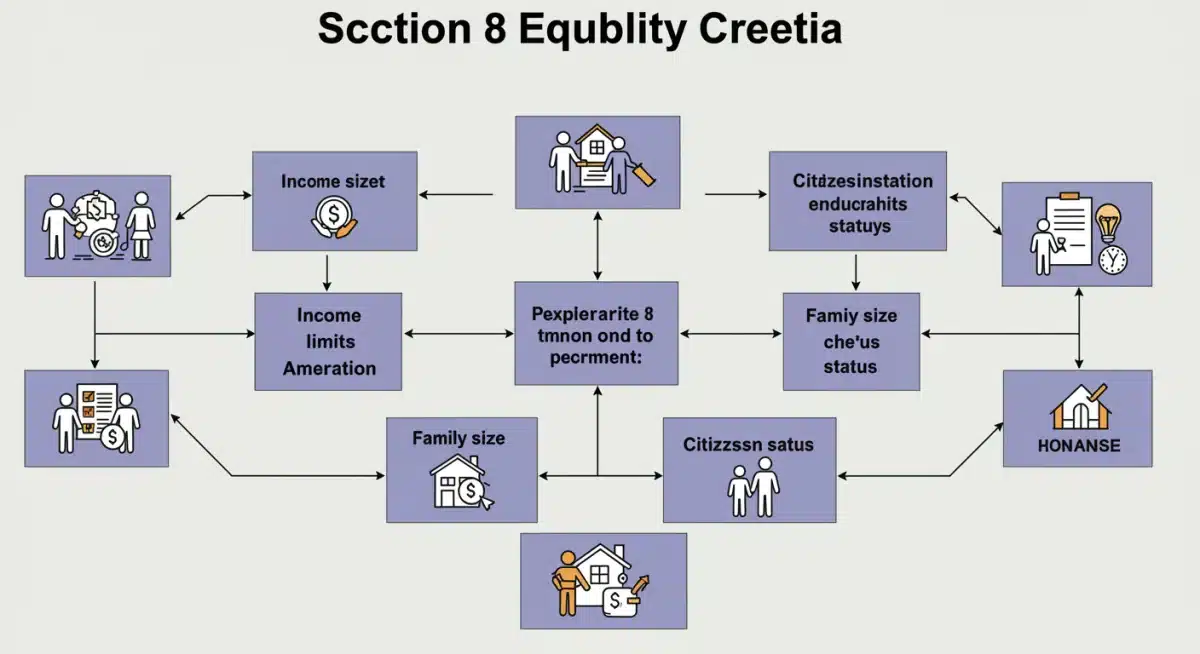
Eligibility for Section 8 Vouchers is primarily determined by income and family composition, with some additional criteria. While specific thresholds can vary by location and are subject to change, the general guidelines are expected to remain consistent for Section 8 Vouchers 2026.
Income Limits
To qualify for Section 8, an applicant’s income must not exceed 50% of the median income for the county or metropolitan area in which they choose to live. By law, 75% of new Section 8 vouchers issued each year must go to families whose incomes do not exceed 30% of the area median income. These income limits are set by HUD and are updated annually. For Section 8 Vouchers 2026, applicants will need to refer to the most current income guidelines published by HUD for their specific area. It’s important to note that median income varies significantly across different regions, meaning what qualifies as low-income in one city might not in another.
Family Status and Composition
The term ‘family’ for Section 8 purposes is broadly defined and can include single individuals, elderly persons, persons with disabilities, and traditional families with children. The size of the family is a crucial factor in determining the appropriate voucher size and the amount of assistance received. PHAs will verify family composition during the application process.
Citizenship and Immigration Status
Eligibility for Section 8 Vouchers 2026 is generally restricted to U.S. citizens and certain categories of non-citizens who have eligible immigration status. All family members must declare their citizenship or eligible immigration status, and documentation will be required. Special provisions exist for mixed-status families, where some members are eligible and others are not.
Other Eligibility Factors
- Criminal Background: PHAs conduct background checks. Certain criminal convictions, particularly those related to drug-related criminal activity or violent crimes, can lead to disqualification.
- Eviction History: Applicants with a history of evictions from federally assisted housing for drug-related criminal activity may be denied.
- Previous Program Participation: Individuals who have been terminated from the Section 8 program in the past due to program violations may face difficulties in reapplying.
It is crucial for applicants to be transparent and provide accurate information at every stage of the application process. Misrepresentation can lead to disqualification or even legal penalties.
The Application Process for Section 8 Vouchers in 2026
Applying for Section 8 Vouchers can be a lengthy process due to high demand. Understanding each step is vital for a successful application in 2026.

Step 1: Finding an Open Waiting List
The most significant hurdle for many applicants is finding an open Section 8 waiting list. Most PHAs maintain waiting lists that are often closed for extended periods due to overwhelming demand. There is no centralized national waiting list; each PHA manages its own. To apply for Section 8 Vouchers 2026, you will need to:
- Contact your local PHA directly.
- Check PHA websites for announcements regarding waiting list openings.
- Utilize online resources and directories that track open waiting lists across different regions.
- Consider applying to multiple PHAs in different jurisdictions if you are willing and able to relocate, as some areas may have shorter waiting lists or more frequent openings.
When a waiting list opens, it is often for a limited time and may involve a lottery system. Acting quickly and having all necessary documentation ready is paramount.
Step 2: Submitting the Pre-Application
Once a waiting list is open, the first step is typically to submit a pre-application. This is a brief form that collects basic information such as name, address, family size, and income. It helps the PHA determine if you meet the initial eligibility criteria. It is essential to fill this out accurately, as any discrepancies later on could cause delays or issues.
Step 3: The Waiting List Period
After submitting a pre-application and being deemed eligible, your name will be placed on the waiting list. This period can range from a few months to several years, depending on the demand in your area. During this time, it is crucial to:
- Keep your contact information updated: Notify the PHA immediately of any changes to your address or phone number. Failure to do so could result in your application being removed from the list.
- Respond to all PHA communications: PHAs may periodically send letters to confirm your continued interest or to request updated information. Prompt responses are critical.
Step 4: Full Application and Interview
When your name nears the top of the waiting list, the PHA will contact you to complete a full application and schedule an interview. This stage is more detailed and requires extensive documentation. You will need to provide:
- Proof of identity (birth certificates, social security cards for all family members).
- Income verification (pay stubs, tax returns, benefit statements).
- Asset verification (bank statements, property holdings).
- Proof of any disabilities or elderly status.
- Landlord references.
- Criminal background checks will be conducted at this stage.
The interview is an opportunity for the PHA to clarify any information and ensure all documentation is in order. Be prepared to answer questions about your household, income, and housing history.
Step 5: Voucher Issuance and Housing Search
If approved, you will be issued a Section 8 voucher. This voucher certifies your eligibility and the amount of rental assistance you will receive. You will then have a limited time (typically 60-120 days) to find a suitable housing unit. The unit must meet HUD’s Housing Quality Standards (HQS) and the rent must be reasonable, as determined by the PHA’s payment standards.
- Housing Quality Standards (HQS): The PHA will inspect the chosen unit to ensure it is safe, sanitary, and in good condition.
- Rent Reasonableness: The PHA will compare the proposed rent to market rents for similar units in the area to ensure it is not excessive.
Once a unit is found and approved, the PHA will enter into a contract with the landlord, and you will sign a lease with the landlord. The voucher assistance will then begin.
Anticipated Changes and Considerations for Section 8 Vouchers in 2026
While the core structure of the Section 8 program is expected to remain intact, several factors could influence its operation and impact for Section 8 Vouchers 2026.
Potential Legislative Reforms
Housing affordability is a persistent issue, and there are ongoing discussions at the federal level about expanding housing assistance programs. While major overhauls are rare, incremental changes to funding, eligibility criteria, or program administration could occur. Keeping an eye on HUD announcements and congressional discussions will be important. For instance, there might be initiatives to streamline the application process, increase the number of available vouchers, or provide additional support for specific vulnerable populations.
Economic Factors and Rental Markets
The state of the economy and local rental markets significantly impact the Section 8 program. Rising rents can make it more challenging for voucher holders to find suitable housing, as the PHA’s payment standards may not always keep pace with rapidly increasing market rates. Conversely, a stable or declining rental market could ease the housing search for voucher recipients. Economic forecasts for 2026 suggest continued volatility, which could place additional pressure on housing assistance programs.
Technology and Digitalization
PHAs are increasingly adopting technology to manage applications, communications, and program administration. For Section 8 Vouchers 2026, we might see more widespread online applications, digital portals for submitting documents, and electronic communication. This can improve efficiency but also requires applicants to have access to and proficiency with digital tools. Efforts to bridge the digital divide for low-income populations will be crucial.
Addressing Homelessness and Special Populations
There’s a growing national focus on addressing homelessness and providing targeted housing assistance to specific vulnerable populations, such as veterans, individuals experiencing chronic homelessness, and those transitioning from institutional settings. While Section 8 is a broad program, there may be continued emphasis on allocating vouchers or providing supportive services to these groups, potentially through specific set-asides or enhanced coordination with other social service agencies. This could mean a more integrated approach to housing and support services for Section 8 Vouchers 2026.
Maximizing Your Chances for Section 8 Vouchers in 2026
Given the competitive nature of the Section 8 program, taking proactive steps can significantly improve your chances of success.
Be Prepared and Organized
Have all necessary documentation ready before applying. This includes:
- Birth certificates and Social Security cards for all household members.
- Proof of income (pay stubs, W-2s, benefit letters, tax returns).
- Bank statements and other asset documentation.
- Proof of legal residency or citizenship.
- Current landlord contact information and previous rental history.
Creating a dedicated folder or digital file for these documents will save time and reduce stress when an opportunity arises for Section 8 Vouchers 2026.
Stay Informed and Proactive
Regularly check the websites of PHAs in your desired areas for announcements about waiting list openings. Sign up for email alerts if available. Consider attending community meetings or workshops related to housing assistance, as these can provide valuable information and networking opportunities.
Understand Local Preferences
Many PHAs give preference to certain groups when selecting applicants from the waiting list. These preferences can vary widely by PHA but often include:
- Elderly or disabled families.
- Families with children.
- Veterans.
- Homeless individuals or families.
- Local residents or those who work in the jurisdiction.
- Victims of domestic violence.
Understanding if you qualify for any local preferences can significantly shorten your waiting time for Section 8 Vouchers 2026.
Maintain Good Tenant History
A positive rental history is crucial. Landlords often provide references, and PHAs review past tenancies. Paying rent on time, adhering to lease agreements, and maintaining the property well will reflect favorably on your application.
Seek Assistance from Housing Counselors
Non-profit housing counseling agencies can provide invaluable guidance throughout the Section 8 application process. They can help you understand eligibility requirements, assist with paperwork, and offer advice on navigating waiting lists. HUD-approved housing counseling agencies offer services that can be particularly beneficial for those new to the process or facing complex situations.
Challenges and Opportunities for Section 8 Vouchers in 2026
Despite its critical role, the Section 8 program faces ongoing challenges, alongside opportunities for improvement.
Challenges:
- Funding Gaps: The program is dependent on federal appropriations. Insufficient funding can limit the number of vouchers available and slow down administrative processes.
- Landlord Participation: Some landlords are hesitant to participate in the Section 8 program due to perceived bureaucratic hurdles, inspection requirements, or concerns about tenant behavior. Efforts to incentivize landlord participation are ongoing.
- NIMBYism: Not In My Backyard (NIMBY) attitudes can make it difficult to site affordable housing developments or for voucher holders to find housing in certain desirable neighborhoods.
- Administrative Burden: PHAs often operate with limited resources, leading to long processing times and communication challenges.
Opportunities:
- Technological Advancements: Digital platforms can streamline applications, inspections, and communication, improving efficiency for PHAs and applicants.
- Policy Innovation: New policy approaches, such as mobility programs that help families move to areas of opportunity, or initiatives to pair housing with supportive services, can enhance the program’s effectiveness.
- Community Partnerships: Collaboration between PHAs, non-profits, local governments, and private developers can expand housing options and support services for voucher holders.
- Increased Awareness and Advocacy: Greater public understanding and advocacy for affordable housing can lead to increased political will and funding for programs like Section 8.
Conclusion: Navigating Section 8 Vouchers in 2026
The Section 8 Housing Choice Voucher Program remains a lifeline for millions seeking stable and affordable housing. As we look to Section 8 Vouchers 2026, the fundamental principles of the program are expected to endure, but applicants must be prepared for an environment shaped by economic trends, technological advancements, and ongoing policy discussions. By staying informed, meticulously preparing your application, understanding local nuances, and proactively engaging with housing resources, you can significantly improve your chances of securing this vital housing assistance. The journey to affordable housing can be challenging, but with the right knowledge and persistence, the promise of a safe and stable home through Section 8 Vouchers 2026 is an achievable goal.
For the most up-to-date information on Section 8 Vouchers in 2026, always refer to the official HUD website and your local Public Housing Agency (PHA).