
Understanding the 2026 Updates in Mental Health Parity Laws: Your Rights and Access to Care
The landscape of healthcare is constantly evolving, and few areas have seen as much crucial development recently as mental health and substance use disorder (SUD) care. With the impending 2026 updates to mental health parity laws, significant changes are on the horizon that promise to reshape how millions of Americans access vital behavioral health services. These updates are not just minor tweaks; they represent a concerted effort to strengthen existing parity regulations, close loopholes, and ensure that mental health and substance use disorder benefits are treated no less favorably than medical and surgical benefits. For individuals, families, and healthcare providers alike, understanding these changes is paramount to navigating the future of care.
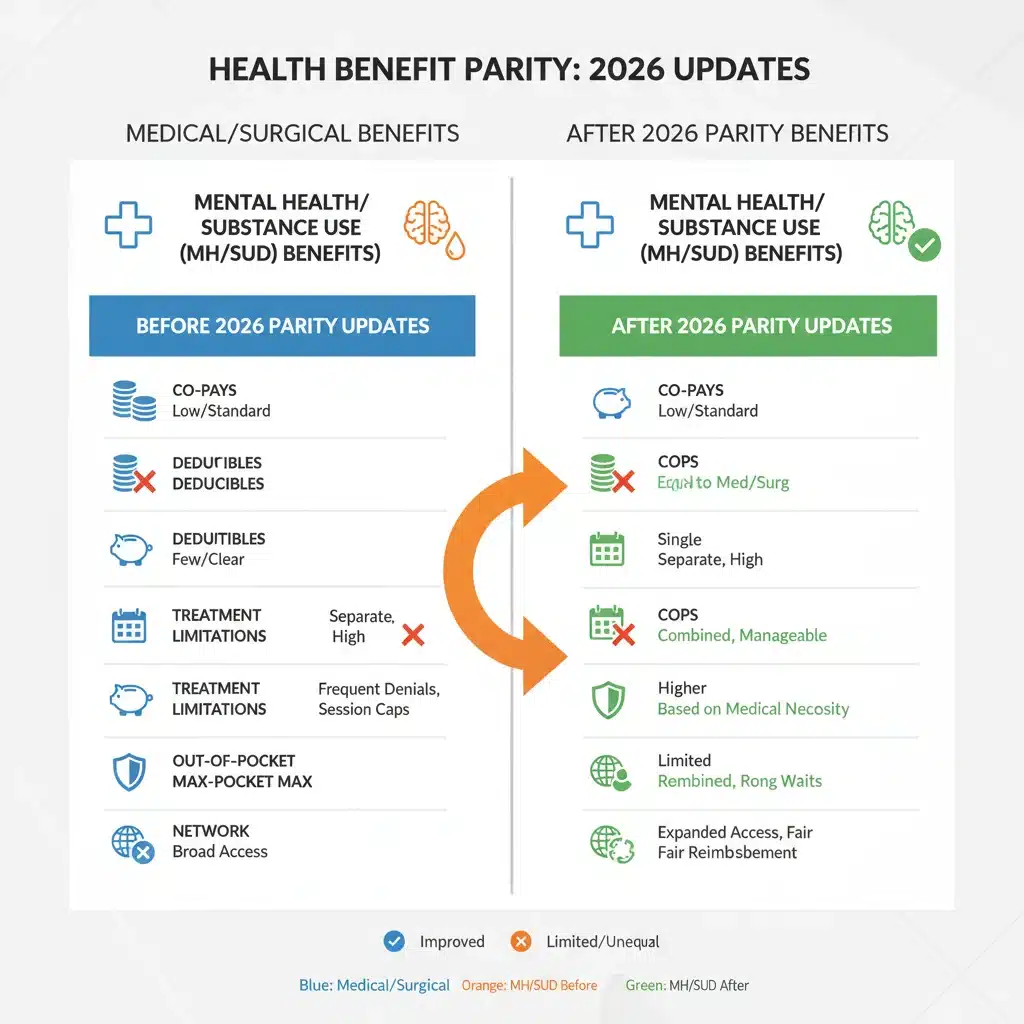
For too long, a stark disparity has existed in how mental health and physical health conditions are covered by insurance. Despite the Mental Health Parity and Addiction Equity Act (MHPAEA) of 2008, which aimed to prevent such discrimination, many individuals still face higher co-pays, stricter treatment limitations, and more hurdles when seeking behavioral health care compared to physical health care. The mental health parity 2026 updates are designed to address these persistent challenges, providing clearer guidelines, enhanced enforcement mechanisms, and a greater emphasis on equitable access.
This comprehensive guide will delve into the specifics of the 2026 updates, explaining what they mean for your rights, your insurance coverage, and your ability to access the care you need. We will explore the historical context of mental health parity, dissect the key provisions of the new regulations, and offer practical advice on how to advocate for yourself or your loved ones. By the end of this article, you will have a clearer understanding of how these transformative changes are designed to foster a more equitable and supportive healthcare system for everyone.
The Historical Context of Mental Health Parity
To truly appreciate the significance of the mental health parity 2026 updates, it’s essential to look back at the journey of mental health parity in the United States. The concept of parity — treating mental health conditions equally to physical health conditions — has been a long and arduous battle for advocates and patients.
Early Efforts and the MHPAEA of 2008
Before the late 20th century, mental health care was often an afterthought in insurance plans, if covered at all. The first significant federal legislation addressing this imbalance was the Mental Health Parity Act of 1996, which prohibited group health plans from imposing lower annual or lifetime dollar limits on mental health benefits than on medical/surgical benefits. While a step in the right direction, this act had significant limitations; it did not require plans to cover mental health benefits at all, nor did it address other forms of discrimination, such as differing co-pays, deductibles, or treatment visit limits.
The landmark Mental Health Parity and Addiction Equity Act (MHPAEA) of 2008 marked a pivotal moment. MHPAEA significantly expanded upon the 1996 act by requiring that financial requirements (like deductibles, co-payments, out-of-pocket maximums) and treatment limitations (like frequency of treatment, duration of treatment, facility type) applicable to mental health and substance use disorder (MH/SUD) benefits be no more restrictive than those applied to substantially all medical and surgical (M/S) benefits. This meant that if an insurance plan covered MH/SUD benefits, it had to do so on par with M/S benefits.
Persistent Challenges and Enforcement Gaps
Despite MHPAEA’s intent, its implementation has been fraught with challenges. Insurers often found ways to circumvent the spirit of the law, leading to continued disparities. Common tactics included:
- Non-Quantitative Treatment Limitations (NQTLs): These are non-numerical limits on benefits, such as prior authorization requirements, medical necessity criteria, or network admission standards. Plans frequently applied more restrictive NQTLs to MH/SUD benefits than to M/S benefits, making it harder for patients to access care.
- Network Adequacy Issues: While a plan might technically cover MH/SUD services, the network of available providers might be so limited that patients struggle to find in-network care, forcing them into higher out-of-network costs.
- Lack of Transparency: The complexity of insurance plans and the difficulty in obtaining clear explanations for denials or limitations made it challenging for consumers to identify and challenge parity violations.
- Enforcement Difficulties: Oversight and enforcement of MHPAEA have been inconsistent, leaving many violations unaddressed.
These persistent issues highlighted the need for stronger regulations and more robust enforcement mechanisms. The mental health parity 2026 updates aim to directly tackle these systemic problems, building upon the foundation of MHPAEA while addressing its shortcomings.
Key Provisions of the 2026 Mental Health Parity Updates
The upcoming 2026 updates represent a significant overhaul of how parity is defined, monitored, and enforced. While the final rules are still being solidified, the proposed changes indicate a strong commitment to achieving true equity. Here are some of the most critical provisions:
Strengthening Non-Quantitative Treatment Limitations (NQTLs) Analysis
Perhaps the most impactful change revolves around NQTLs. The new regulations will require plans and issuers to conduct a more rigorous and transparent comparative analysis of their NQTLs for MH/SUD benefits versus M/S benefits. This isn’t just about showing that a policy exists; it’s about demonstrating how it’s applied in practice. Key aspects include:
- Enhanced Data Requirements: Plans will need to collect and analyze data to prove that NQTLs are applied equitably. This includes data on approval and denial rates, network admission standards, and provider reimbursement rates.
- Specific NQTL Examples: The regulations will provide clearer examples of NQTLs that are likely to violate parity, such as overly restrictive prior authorization for SUD treatment or discriminatory standards for residential mental health care.
- Focus on Outcomes: The analysis must demonstrate not just that the NQTL process is similar, but that the outcomes of applying those NQTLs are also comparable across benefit types. For example, if prior authorization for MH/SUD services results in significantly higher denial rates or longer wait times than for M/S services, it could be deemed a parity violation.
Improved Network Adequacy Standards
A common complaint under current parity laws is the lack of adequate MH/SUD providers within insurance networks. The 2026 updates aim to tackle this head-on by:
- Defining Network Adequacy: Establishing clearer, measurable standards for network adequacy for MH/SUD providers, including geographic access, appointment wait times, and provider-to-patient ratios.
- Data Collection and Reporting: Requiring plans to regularly collect and report data on their MH/SUD networks, making it easier for regulators and consumers to identify shortcomings.
- Addressing Provider Reimbursement: Scrutinizing provider reimbursement rates for MH/SUD services to ensure they are competitive enough to attract and retain sufficient providers in the network, preventing indirect discrimination.
This focus on network adequacy is crucial, as a benefit is only truly accessible if there are qualified providers available to deliver it.
Enhanced Enforcement and Transparency
The success of any regulation hinges on its enforcement. The mental health parity 2026 updates will empower federal and state regulators with more tools and clearer mandates:
- Proactive Reviews: Regulators will be required to conduct more proactive reviews of plans’ comparative analyses, rather than waiting for complaints.
- Increased Penalties: Stronger penalties for non-compliance will provide a greater deterrent against parity violations.
- Consumer Protections: New requirements for plans to provide clear, understandable information to consumers about their MH/SUD benefits, including the criteria for medical necessity and NQTLs, will empower individuals to advocate for themselves.
- Reporting Requirements: Plans will likely face new reporting obligations to demonstrate their compliance, enhancing transparency for both regulators and the public.
Prohibition of Discriminatory Out-of-Network Coverage
While MHPAEA addressed in-network benefits, some plans maintained discriminatory practices for out-of-network MH/SUD care. The 2026 updates are expected to further clarify and strengthen protections against such practices, ensuring that if a plan offers out-of-network benefits for M/S care, it must do so equitably for MH/SUD care.
Impact on Telehealth Services
The COVID-19 pandemic dramatically accelerated the adoption of telehealth for mental health services. The 2026 updates are likely to incorporate provisions ensuring that telehealth for MH/SUD care is covered on par with telehealth for M/S care, addressing any lingering disparities in access or reimbursement for virtual services.
Your Rights Under the 2026 Mental Health Parity Laws
Understanding your rights is the first step toward effective advocacy. The mental health parity 2026 updates are designed to solidify these rights and provide clearer pathways for recourse. Here’s what you should know:
Equal Treatment for Mental Health and Substance Use Disorder Benefits
Fundamentally, your right is to have your MH/SUD benefits treated no less favorably than your medical/surgical benefits. This applies to:
- Financial Requirements: Co-pays, deductibles, co-insurance, and out-of-pocket maximums for MH/SUD care should be no more restrictive than for M/S care.
- Quantitative Treatment Limitations (QTLs): Limits on the number of visits or days of treatment for MH/SUD conditions should be comparable to those for M/S conditions.
- Non-Quantitative Treatment Limitations (NQTLs): Prior authorization, medical necessity criteria, step therapy protocols, and other non-numerical hurdles should be applied with the same rigor and standard for MH/SUD care as for M/S care.
- Out-of-Network Coverage: If your plan covers out-of-network M/S services, it must do so for MH/SUD services under comparable terms.
Right to Information and Transparency
You have the right to clear, understandable information from your health plan regarding your MH/SUD benefits. This includes:
- Explanation of Benefits (EOB): A detailed explanation of why a claim was paid or denied.
- Medical Necessity Criteria: The specific criteria used by your plan to determine if a service is medically necessary.
- NQTL Comparative Analysis: Under the new rules, you may have the right to request access to the plan’s comparative analysis of NQTLs, which can help you understand if a denial is based on discriminatory practices.
Right to Appeal and External Review
If your claim for MH/SUD services is denied, you have the right to:
- Internal Appeal: You can appeal the decision directly with your insurance company. The plan must provide a clear process for this.
- External Review: If your internal appeal is denied, you have the right to an independent external review by a third party. This can be a powerful tool for overturning unfair denials.
No Prior Authorization for Emergency Mental Health Care
Just as with physical health emergencies, plans generally cannot require prior authorization for emergency mental health or substance use disorder services.

Navigating Your Insurance and Advocating for Your Care
Even with stronger mental health parity 2026 laws, navigating the healthcare system can be complex. Here’s how you can proactively advocate for your rights and access the care you need:
Before You Seek Care: Know Your Plan
- Review Your Summary of Benefits and Coverage (SBC): This document provides a high-level overview of your plan’s benefits. Look for sections on mental health and substance use disorder services.
- Contact Your Insurer: Call your insurance company directly. Ask specific questions about co-pays, deductibles, prior authorization requirements, and network availability for the type of MH/SUD care you need. Document who you spoke with, the date, and what was discussed.
- Understand Medical Necessity: Ask your insurer for the medical necessity criteria they use for MH/SUD services. This will help you and your provider ensure your treatment plan aligns with their requirements.
- Check Provider Networks: Verify that your preferred providers are in-network. If not, ask about out-of-network benefits and reimbursement rates.
During Care: Document Everything
- Keep Records: Maintain a detailed record of all communications with your insurance company, including dates, names of representatives, and reference numbers.
- Save All Correspondence: Keep copies of all Explanation of Benefits (EOBs), denial letters, and approval letters.
- Work with Your Provider: Your mental health or SUD provider can be a valuable ally. They can help with prior authorizations, write letters of medical necessity, and assist in appeals.
If Your Claim is Denied or Limited: The Appeals Process
If you believe your plan is violating parity laws, follow these steps:
- Internal Appeal: File an internal appeal with your insurance company. Clearly state why you believe the denial or limitation is a parity violation, referencing your plan documents and the MHPAEA. Provide any supporting documentation from your provider.
- External Review: If your internal appeal is denied, pursue an external review. This independent review can often overturn unfair denials.
- Contact Regulators: If internal and external appeals are unsuccessful, or if you suspect a pattern of violations, contact your state insurance department or the federal Department of Labor (for ERISA-governed plans). They can investigate potential parity violations.
- Seek Advocacy Assistance: Organizations like The Kennedy Forum, the National Alliance on Mental Illness (NAMI), and the American Psychiatric Association often provide resources and support for individuals facing parity issues.
The Broader Impact of the 2026 Updates
The mental health parity 2026 updates are expected to have a far-reaching impact beyond individual claims and appeals:
- Improved Public Health Outcomes: By reducing barriers to care, more people will be able to access timely and appropriate treatment for mental health conditions and SUDs, leading to better overall health outcomes, reduced emergency room visits, and decreased societal costs.
- Reduced Stigma: Treating mental health and physical health equally in insurance coverage sends a powerful message that mental illness is a legitimate health condition, helping to reduce stigma and encourage more people to seek help.
- Economic Benefits: Untreated mental health and SUDs carry significant economic costs due to lost productivity, disability, and increased healthcare utilization. Improved access to care can lead to a healthier, more productive workforce.
- Innovation in Care Delivery: As plans are incentivized to build more robust MH/SUD networks and offer equitable services, there may be increased investment in innovative care models, including integrated care, telehealth, and community-based services.
- Enhanced Data Collection and Research: The new data requirements will provide invaluable insights into the state of mental health care access, identifying persistent gaps and informing future policy decisions.
These updates represent a critical step towards a healthcare system that truly values and supports the complete well-being of its population. They acknowledge that mental health is integral to overall health and that discriminatory practices have no place in modern healthcare.
Challenges and Future Outlook
While the mental health parity 2026 updates are a cause for optimism, challenges remain. Implementing such comprehensive regulations across diverse insurance markets will require significant effort from both regulators and insurers. Potential hurdles include:
- Data Collection Burden: Insurers may argue that the data collection requirements are overly burdensome, potentially leading to pushback or requests for extensions.
- Provider Shortages: Even with improved network adequacy standards, addressing long-standing shortages of mental health and SUD providers, particularly in rural areas, will take time and sustained investment.
- Interpretation and Compliance: The complexity of insurance regulations means there will inevitably be differing interpretations of the new rules, requiring ongoing clarification and guidance from federal and state agencies.
- Vigilant Oversight: Effective enforcement will depend on adequate staffing and resources for regulatory bodies to proactively monitor compliance and investigate complaints.
Despite these challenges, the trajectory is clear: the commitment to mental health parity is strengthening. The 2026 updates are not the end of the journey, but a powerful stride forward. Continuous advocacy from individuals, patient groups, and healthcare organizations will be essential to ensure these new regulations achieve their full potential and truly transform access to mental health and substance use disorder care.
Conclusion
The mental health parity 2026 updates are poised to be a game-changer for millions of Americans seeking mental health and substance use disorder care. By strengthening existing laws, addressing persistent loopholes, and enhancing enforcement mechanisms, these regulations aim to foster a healthcare environment where behavioral health conditions are treated with the same respect and coverage as physical ailments. Understanding these changes, knowing your rights, and actively advocating for equitable care are crucial steps for every individual. As we move closer to 2026, staying informed and engaged will empower you to navigate the evolving landscape of healthcare and ensure that the promise of mental health parity becomes a lived reality for all.
This is not just about policy; it’s about people. It’s about ensuring that those struggling with mental health challenges and substance use disorders receive the care they deserve, without facing discriminatory barriers. The journey towards true parity is ongoing, but the 2026 updates represent a monumental leap forward in building a more compassionate and equitable healthcare system for everyone.