Emergency Preparedness 2026: Essential US Community Resources
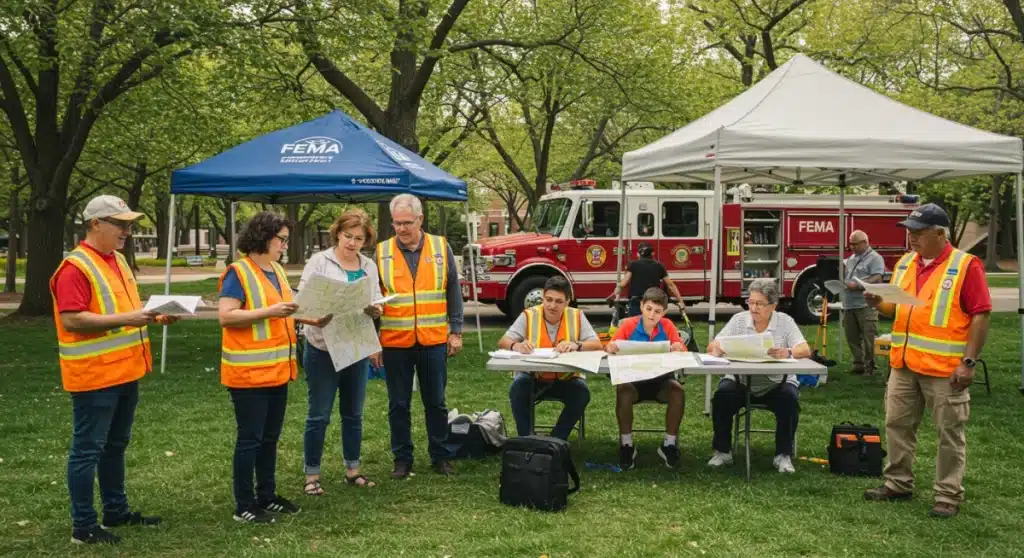
Effective emergency preparedness in 2026 for US residents significantly relies on a comprehensive understanding and proactive utilization of essential community resources, encompassing everything from local government initiatives to advanced digital communication platforms, thereby fostering robust resilience during any crisis.
As we navigate towards 2026, the importance of robust US emergency resources for all residents cannot be overstated. Unexpected events, be they natural disasters or other emergencies, demand a proactive approach to safety and resilience. Understanding where to find and how to utilize essential community resources is not just recommended; it’s a critical component of personal and collective well-being.
Understanding the Landscape of Emergency Preparedness in 2026
The landscape of emergency preparedness is continuously evolving, shaped by new challenges and technological advancements. In 2026, US residents face a complex array of potential threats, from increasingly severe weather patterns to cybersecurity risks affecting critical infrastructure. Being prepared means more than just having a first-aid kit; it involves a holistic understanding of local, state, and federal resources available to support individuals and communities before, during, and after a crisis.
This proactive mindset requires engagement with community programs and a clear grasp of communication channels. It’s about building a network of support that can withstand significant disruption, ensuring that aid reaches those who need it most, and that recovery efforts are swift and effective. The emphasis is shifting from reactive response to anticipatory resilience, making community-level preparedness more vital than ever.
The evolving nature of threats
Threats to community safety are no longer confined to traditional natural disasters. Cyberattacks, public health emergencies, and even supply chain disruptions now factor significantly into comprehensive emergency planning. Each of these new challenges demands specific strategies and resources.
- Climate-related events: Increased frequency and intensity of hurricanes, wildfires, and floods.
- Public health crises: Rapid spread of infectious diseases requiring coordinated public health responses.
- Technological failures: Power grid collapses or widespread internet outages impacting communication.
Understanding these varied threats allows residents to tailor their preparedness plans, focusing on the most probable risks in their specific geographic region and personal circumstances. This personalized approach enhances the effectiveness of any emergency strategy.
Ultimately, a well-informed community is a resilient community. By actively seeking out and understanding the resources available, residents contribute to a stronger collective defense against unforeseen events. This section lays the groundwork for exploring the specific types of community resources that will be indispensable in 2026.
Local Government Programs and Services: Your First Line of Defense
When a crisis strikes, local government agencies are often the first responders and the primary coordinators of aid. These entities provide immediate assistance, disseminate crucial information, and manage the initial phases of disaster response. Familiarizing yourself with your local emergency management agency (EMA) or equivalent department is a foundational step in effective US emergency resources planning.
These local bodies are responsible for creating community-wide emergency plans, conducting drills, and establishing evacuation routes. They also serve as a hub for connecting residents with vital services, including temporary shelters, food distribution centers, and medical aid. Knowing how to contact them and what services they offer can significantly reduce anxiety and improve outcomes during an emergency.
Emergency management agencies (EMAs)
Your local EMA is the cornerstone of community preparedness. They develop and implement comprehensive emergency plans, often working with federal agencies like FEMA. Their role is multi-faceted, covering everything from risk assessment to recovery efforts.
- Emergency alerts: Sign up for local alert systems for real-time updates.
- Shelter information: Know the designated public shelters in your area.
- Evacuation routes: Understand official evacuation plans and routes.
These agencies also often provide free training and workshops on various aspects of emergency preparedness, empowering residents with practical skills and knowledge.
Beyond EMAs, local police and fire departments play critical roles, not only in direct emergency response but also in community education. They frequently host events and provide materials on home safety, fire prevention, and what to do in specific emergency scenarios. Engaging with these departments can provide invaluable insights and build trust within the community.
Understanding the specific roles and responsibilities of these local government entities allows residents to navigate crises more effectively. It ensures that individuals know where to turn for assistance and how to contribute to the broader community response, strengthening the overall preparedness framework.
Non-Profit Organizations and Volunteer Networks: Pillars of Support
Beyond government structures, a robust network of non-profit organizations and volunteer groups forms an indispensable part of US emergency resources. These organizations often fill critical gaps, providing humanitarian aid, specialized services, and emotional support that complements official responses. The American Red Cross, for instance, is synonymous with disaster relief, offering shelter, food, and comfort to those affected by emergencies.
Other groups, such as local food banks, animal welfare organizations, and faith-based charities, also play crucial roles. They mobilize quickly, leveraging their networks of volunteers and donors to provide essential supplies and services. Understanding which of these organizations operate in your area and how they can assist is vital for comprehensive preparedness.
The American Red Cross and its services
The American Red Cross is a national leader in disaster relief, offering a wide array of services that are critical during and after an emergency. Their volunteers are often among the first on the scene, providing immediate assistance.
- Shelter and food: Providing safe havens and meals for displaced individuals.
- Health services: Offering first aid, health screenings, and mental health support.
- Family reunification: Helping families reconnect after a disaster.
Their preparedness programs also extend to teaching CPR, first aid, and disaster readiness courses, empowering individuals to become self-sufficient and capable of assisting others.
Community Emergency Response Teams (CERT) are another excellent example of localized volunteer networks. CERT programs train ordinary citizens in basic disaster response skills, enabling them to assist their communities in the immediate aftermath of an event when professional responders might be overwhelmed. These volunteers are trained in fire safety, light search and rescue, team organization, and disaster medical operations.
Engaging with these non-profit and volunteer networks, whether as a recipient of aid or as a volunteer, strengthens the fabric of community resilience. Their dedication and resources are invaluable in navigating the complexities of emergency situations, providing critical lifelines when they are most needed.
Digital Tools and Communication Channels: Staying Connected
In 2026, digital tools and communication channels are more critical than ever for effective emergency preparedness and response. From official government alert systems to social media platforms, these tools ensure that vital information flows freely, keeping residents informed and connected. Relying solely on traditional communication methods during a crisis can be risky, as infrastructure may be compromised.
Therefore, understanding and utilizing a diverse set of digital resources is a cornerstone of modern emergency planning. This includes signing up for local emergency alerts, knowing which apps provide real-time updates, and understanding how to use social media responsibly for information sharing and status updates. These digital lifelines can make a significant difference in personal safety and community coordination.

Official alert systems and apps
Most local and state governments offer official alert systems that deliver emergency notifications directly to your phone or email. These systems are crucial for receiving timely information about severe weather, evacuations, and other immediate threats. Many also have dedicated mobile applications.
- Wireless Emergency Alerts (WEA): Government-issued alerts for extreme threats.
- NOAA Weather Radio: Provides continuous broadcasts of weather information.
- Local emergency apps: Many cities and counties have their own apps for specific local alerts.
Beyond official alerts, popular social media platforms like X (formerly Twitter) and Facebook often become informal hubs for real-time information sharing during disasters. Following official agency accounts and local news outlets on these platforms can provide additional context and community-specific updates. However, it’s crucial to verify information from unofficial sources to avoid misinformation.
Establishing a family communication plan that includes designated out-of-state contacts and predetermined meeting points is also essential. Digital tools can facilitate these plans, allowing family members to check in and communicate their safety status even if local networks are down. Satellite phones or walkie-talkies can be considered for areas prone to extensive communication outages.
Embracing these digital tools and communication strategies enhances an individual’s and a family’s ability to stay informed, connected, and safe during an emergency. They represent a critical evolution in how we approach and manage crisis situations in the modern era.
Healthcare and Medical Support During Crises
Access to healthcare and medical support is paramount during any emergency. In 2026, understanding the availability of these US emergency resources goes beyond knowing where the nearest hospital is. It involves familiarity with emergency medical services (EMS), public health agencies, and specialized medical response teams that activate during widespread crises. For individuals with chronic conditions or special medical needs, this planning is even more critical.
Public health departments play a key role in managing infectious disease outbreaks, coordinating vaccinations, and providing public health advisories. During a disaster, they also ensure the safety of food and water supplies and monitor for environmental health hazards. Knowing how these entities function and how to access their services can be life-saving.
Emergency medical services (EMS) and hospitals
Emergency medical services (EMS) are the frontline providers of pre-hospital care. Knowing when and how to contact them, as well as understanding their limitations during widespread emergencies, is crucial. Hospitals activate their disaster plans, often establishing triage centers and surge capacities.
- 911 system: Understand appropriate use and potential delays during high-volume events.
- Urgent care centers: Identify alternative medical facilities for non-life-threatening issues to reduce hospital burden.
- Telehealth options: Explore virtual consultations for minor medical needs when physical access is difficult.
For individuals with pre-existing medical conditions, creating an emergency medical kit that includes a sufficient supply of prescription medications, medical devices, and a copy of their medical history is vital. This kit should be easily accessible and portable. Discussing emergency plans with healthcare providers can also help tailor specific needs to broader community resources.
Furthermore, some communities have established medical reserve corps (MRCs) composed of healthcare professionals and others who volunteer their time and expertise during emergencies. These corps can provide medical support, assist with public health initiatives, and staff special needs shelters. Knowing if your community has an MRC and how to access their services can be an important layer of medical support.
By proactively planning for healthcare needs during a crisis, individuals and families can significantly improve their chances of maintaining health and receiving timely medical attention when traditional systems may be stressed or inaccessible.
Financial and Economic Stability in Emergency Situations
The financial impact of an emergency can be devastating, making economic preparedness a crucial, yet often overlooked, aspect of overall resilience. In 2026, understanding the US emergency resources available for financial assistance, unemployment, and housing support is essential. Disasters can lead to job loss, property damage, and unexpected expenses, placing immense strain on individuals and families.
Planning for these eventualities involves more than just saving money; it includes understanding insurance policies, knowing about government aid programs, and exploring community-based financial assistance. Proactive steps can mitigate the economic fallout, allowing for a smoother recovery process.
FEMA financial assistance and small business administration
The Federal Emergency Management Agency (FEMA) offers various forms of financial assistance to individuals and households affected by federally declared disasters. This can include funds for housing, essential repairs, and other serious disaster-related needs. The U.S. Small Business Administration (SBA) also provides low-interest disaster loans to homeowners, renters, businesses, and private non-profits.
- Individual Assistance (IA): Funds for disaster-related housing and other essential needs.
- Disaster Unemployment Assistance (DUA): Financial aid for those whose employment is affected by a disaster.
- SBA Disaster Loans: Loans for property damage and economic injury for businesses.
Beyond federal programs, many state and local governments offer emergency financial aid programs. Non-profit organizations and community foundations also frequently establish disaster relief funds that provide immediate cash assistance or vouchers for essential goods and services. Researching these local options beforehand can provide additional layers of financial security.
It is also prudent to maintain important financial documents in a secure, waterproof, and easily accessible location, or digitally backed up. This includes insurance policies, bank account information, deeds, and identification documents. Having these readily available will expedite the process of applying for aid and recovering financially. Creating a small emergency fund specifically for unexpected events can also provide a critical buffer.
Addressing the financial dimension of emergency preparedness ensures that individuals and communities are not only physically safe but also economically stable enough to rebuild and recover effectively after a crisis.
Building Community Resilience and Long-Term Recovery
True emergency preparedness extends beyond immediate response to encompass long-term community resilience and recovery. In 2026, this means fostering a collective spirit of support and proactive planning that helps communities bounce back stronger from adversity. It involves not just repairing physical damage but also addressing the psychological and social impacts of a crisis, ensuring that all residents, especially vulnerable populations, are supported throughout the recovery journey.
Community-led initiatives, such as neighborhood watch programs with an emergency focus, mutual aid networks, and local rebuilding efforts, are vital for sustainable recovery. These efforts leverage local knowledge and resources, tailoring solutions to specific community needs and strengthening social cohesion.
Community-led recovery initiatives
Empowering local residents to take an active role in recovery efforts can significantly accelerate the rebuilding process and foster a sense of collective ownership. These initiatives often spring from grassroots efforts and are highly adaptable to specific community contexts.
- Neighborhood watch groups: Expanding their scope to include disaster communication and assistance.
- Mutual aid networks: Neighbors helping neighbors with resources, skills, and emotional support.
- Local rebuilding projects: Volunteer-driven efforts to repair homes and public spaces.
Mental health support is another critical component of long-term recovery. Disasters can have profound psychological effects, and ensuring access to counseling, support groups, and mental health services is essential for healing. Many non-profit organizations and public health agencies offer these services, often free of charge, to affected individuals and communities.
Investing in resilient infrastructure, such as reinforced buildings, improved drainage systems, and diversified power sources, also contributes significantly to long-term preparedness. While these are often large-scale government or private sector projects, community advocacy can play a role in prioritizing such investments. Education and ongoing training programs for residents on various aspects of preparedness also build a more knowledgeable and capable populace.
By focusing on collective action, comprehensive support, and continuous improvement, communities can transform the challenges of emergencies into opportunities for growth and heightened resilience, ensuring a more secure future for all US residents.
| Key Resource Category | Brief Description |
|---|---|
| Local Government Agencies | First responders, emergency alerts, shelter management, and evacuation coordination. |
| Non-Profit & Volunteer Groups | Humanitarian aid, specialized services (e.g., Red Cross, CERT), and community support. |
| Digital Tools & Communication | Official alert systems, mobile apps, and social media for real-time information and connection. |
| Financial & Economic Aid | FEMA assistance, SBA loans, and local programs for recovery and stability. |
Frequently Asked Questions About US Emergency Resources
Your local Emergency Management Agency (EMA) is the primary resource, coordinating alerts, shelters, and evacuation routes. Police and fire departments also provide crucial information and direct response, acting as the first line of defense in immediate crises.
Non-profits like the American Red Cross offer vital humanitarian aid, including shelter, food, and medical support. Volunteer networks such as CERT train citizens in basic disaster response, filling critical gaps when professional responders are overwhelmed.
Official government alert systems (e.g., WEA), NOAA Weather Radio, and local emergency apps provide real-time updates. Social media platforms can also be useful for information sharing, but always verify sources for accuracy to avoid misinformation.
FEMA offers Individual Assistance for housing and essential needs, and Disaster Unemployment Assistance. The Small Business Administration (SBA) provides low-interest disaster loans for property damage and economic injury to homeowners and businesses affected by federally declared disasters.
Long-term resilience involves community-led initiatives like mutual aid networks and local rebuilding projects. Prioritizing mental health support, investing in resilient infrastructure, and ongoing public education also contribute significantly to sustained recovery and preparedness for future events.
Conclusion
Effective US emergency resources are not merely a contingency plan but a foundational element of community safety and resilience in 2026 and beyond. From understanding local government programs and leveraging non-profit support to utilizing modern digital communication and planning for financial stability, a multi-faceted approach is essential. By actively engaging with these resources and fostering a proactive mindset, individuals and communities can significantly enhance their capacity to withstand, respond to, and recover from any crisis, ensuring a more secure and prepared future for all US residents.