2026 Health Insurance Marketplace: Affordable Plans Under $300/Month

Navigating the complex world of health insurance can often feel like an insurmountable challenge, especially when you’re on a tight budget. As we look towards 2026, many individuals and families are asking a critical question: how can I find affordable health insurance 2026 plans, particularly those priced under $300 per month, without compromising on essential coverage? The good news is that the Health Insurance Marketplace, established under the Affordable Care Act (ACA), continues to be a vital resource for millions, offering a range of options and, crucially, financial assistance.
This comprehensive guide is designed to empower you with the knowledge and tools to confidently compare 2026 Health Insurance Marketplace plans. We’ll delve into a data-driven analysis, explore the mechanisms of financial assistance, and provide practical strategies to help you secure quality, affordable health insurance 2026, all while staying within that coveted sub-$300 monthly premium target. Understanding the nuances of the Marketplace, from plan categories to subsidy eligibility, is your first step towards making an informed decision that protects both your health and your wallet.
Understanding the 2026 Health Insurance Marketplace Landscape
The Health Insurance Marketplace, often referred to as the exchange, is a government-regulated platform where individuals, families, and small businesses can shop for and enroll in health insurance plans. It’s designed to make health insurance more accessible and affordable, especially for those who don’t have access to employer-sponsored coverage. For 2026, the fundamental structure of the Marketplace is expected to remain consistent, though specific plan offerings, premiums, and subsidy levels may be adjusted based on economic factors, legislative changes, and the evolving healthcare landscape.
Key Features of the Marketplace
- Guaranteed Issue: Insurers cannot deny you coverage or charge you more based on pre-existing conditions.
- Essential Health Benefits: All plans must cover a core set of ten essential health benefits, including doctor visits, hospital care, prescription drugs, mental health services, and maternity care.
- Financial Assistance: A cornerstone of the Marketplace, subsidies (premium tax credits and cost-sharing reductions) are available to eligible individuals and families to lower monthly premiums and out-of-pocket costs.
- Plan Categories: Plans are categorized into Bronze, Silver, Gold, and Platinum levels, indicating the percentage of healthcare costs the plan is expected to cover.
The Importance of Open Enrollment
Open Enrollment is the annual period during which individuals can enroll in a new health insurance plan or make changes to their existing plan through the Marketplace. While specific dates for 2026 will be announced later, it typically runs from November 1st to December 15th for coverage starting January 1st of the following year. Missing this window means you’ll generally have to wait until the next Open Enrollment period unless you qualify for a Special Enrollment Period (SEP) due to a life event like marriage, birth of a child, or loss of other coverage.
Decoding Financial Assistance: Subsidies and Cost-Sharing Reductions
The primary mechanism for making affordable health insurance 2026 a reality for many is financial assistance. This comes in two main forms:
1. Premium Tax Credits (PTC)
Premium Tax Credits are federal subsidies that reduce your monthly health insurance premiums. Eligibility is based on your household income and family size relative to the Federal Poverty Level (FPL). The American Rescue Plan Act (ARPA) and subsequent legislation significantly expanded these subsidies, making more people eligible and increasing the amount of assistance. This expansion is currently set to continue, which is crucial for finding affordable health insurance 2026.
- How it works: You can choose to have the tax credit paid directly to your insurance company each month, lowering your premium immediately, or you can claim the full amount when you file your federal income tax return.
- Income Thresholds: While historically, premium tax credits were limited to those earning between 100% and 400% of the FPL, recent changes have removed the upper income cap, ensuring that no one pays more than 8.5% of their household income for a benchmark Silver plan. This is a game-changer for many individuals and families, making affordable health insurance 2026 more attainable than ever.
2. Cost-Sharing Reductions (CSR)
Cost-Sharing Reductions are a special type of financial assistance that lowers your out-of-pocket costs, such as deductibles, copayments, and coinsurance. Unlike premium tax credits, CSRs are only available if you enroll in a Silver plan. They are designed to provide additional financial protection for those with lower incomes.
- Eligibility: CSRs are available to individuals and families with incomes between 100% and 250% of the FPL.
- Impact: A Silver plan with CSRs effectively functions like a Gold or Platinum plan, covering a higher percentage of your medical costs, but at a lower premium. This can be incredibly beneficial for those who anticipate needing regular medical care.
Understanding your eligibility for both premium tax credits and cost-sharing reductions is paramount when searching for affordable health insurance 2026. These subsidies are often the key to finding a plan under $300 per month.
Strategies for Finding Affordable Health Insurance 2026 Under $300/Month
Achieving that sub-$300 monthly premium goal requires a strategic approach. Here’s how to maximize your chances:
1. Accurately Estimate Your Income
Your household income is the primary factor determining your subsidy eligibility. When applying through the Marketplace, you’ll need to estimate your Modified Adjusted Gross Income (MAGI) for the upcoming year (2026). Be as accurate as possible, as significant discrepancies can lead to tax implications later. Include all sources of income, such as wages, self-employment income, unemployment benefits, and certain retirement distributions.
2. Explore Different Plan Categories
The Marketplace offers plans in four metallic categories: Bronze, Silver, Gold, and Platinum. Each category balances premiums with out-of-pocket costs differently:
- Bronze Plans: Typically have the lowest monthly premiums but the highest deductibles and out-of-pocket costs. They cover about 60% of healthcare costs. Best for those who are generally healthy and anticipate minimal medical needs, or who qualify for significant subsidies.
- Silver Plans: Moderate premiums and moderate out-of-pocket costs. They cover about 70% of healthcare costs. Crucially, Silver plans are the only category eligible for Cost-Sharing Reductions, making them highly attractive for those with lower incomes.
- Gold Plans: Higher monthly premiums but lower deductibles and out-of-pocket costs. They cover about 80% of healthcare costs. Suitable for those who expect to use medical services frequently.
- Platinum Plans: The highest monthly premiums but the lowest deductibles and out-of-pocket costs. They cover about 90% of healthcare costs. Ideal for individuals with chronic conditions or those who prefer predictable healthcare expenses.
For individuals aiming for affordable health insurance 2026 under $300, Bronze and Silver plans (especially with CSRs) will be your primary focus. However, with generous premium tax credits, sometimes a Gold plan can surprisingly fall within your budget.
3. Understand Your Healthcare Needs
Before you start comparing plans, take stock of your anticipated healthcare usage. Do you have chronic conditions that require frequent doctor visits or expensive medications? Do you foresee any major medical procedures in 2026? Are you planning to start a family? Your answers will help you decide if a plan with a lower premium but higher deductible (like Bronze) is suitable, or if a plan with a higher premium but lower out-of-pocket costs (like Silver with CSRs or even Gold) might save you money in the long run.
4. Compare Plans Thoroughly on the Marketplace
The official HealthCare.gov website (or your state’s exchange) is the best place to compare plans. Once you enter your income and household information, the system will automatically calculate your eligibility for subsidies and display the net premiums after applying any tax credits. Pay close attention to:
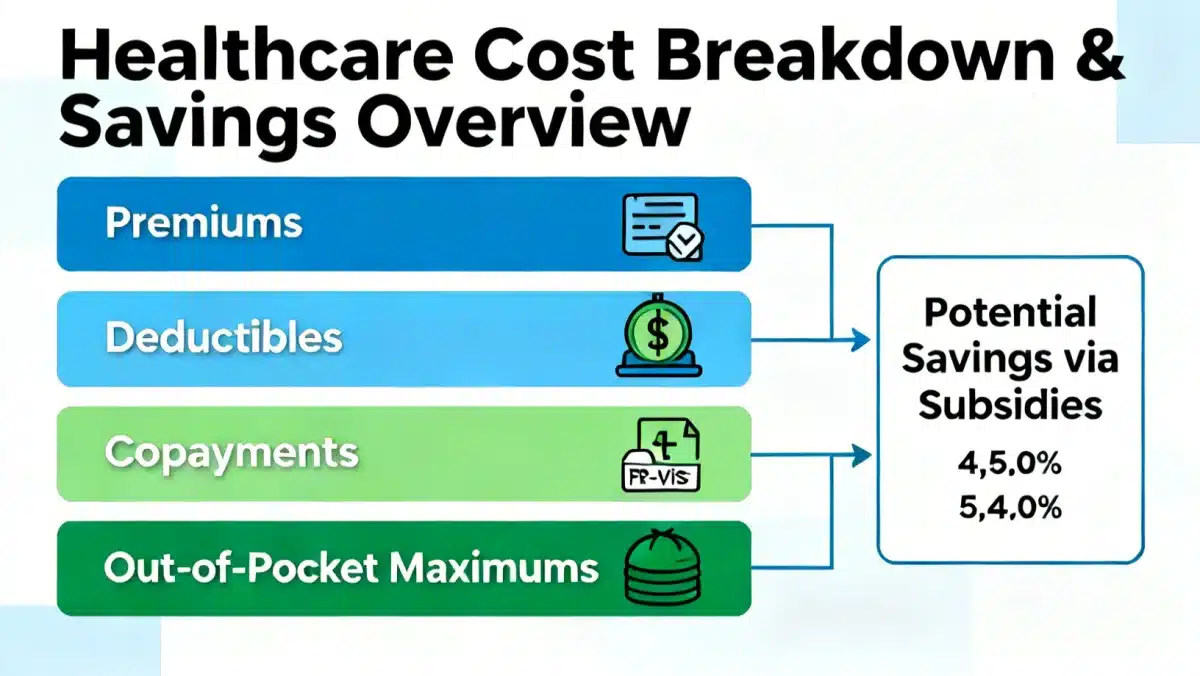
- Monthly Premium: This is the most obvious cost, and the one you’re trying to keep under $300.
- Deductible: How much you have to pay out-of-pocket before your insurance starts to pay for covered services.
- Copayments: Fixed amounts you pay for certain services (e.g., doctor visits, prescription drugs) after meeting your deductible.
- Coinsurance: A percentage of the cost of a covered service you pay after meeting your deductible.
- Out-of-Pocket Maximum: The most you’ll have to pay for covered services in a plan year. Once you hit this limit, your plan pays 100% of covered services. This is a critical protection against catastrophic medical bills.
- Provider Network: Ensure your preferred doctors, specialists, and hospitals are in the plan’s network. Out-of-network care can be significantly more expensive.
- Prescription Drug Coverage: Check if your specific medications are covered and at what cost.
5. Consider Health Savings Accounts (HSAs) with High-Deductible Health Plans (HDHPs)
Many Bronze and some Silver plans are structured as High-Deductible Health Plans (HDHPs). If you enroll in an HDHP, you may be eligible to open and contribute to a Health Savings Account (HSA). An HSA is a tax-advantaged savings account that can be used for qualified medical expenses. Contributions are tax-deductible, earnings grow tax-free, and withdrawals for medical expenses are also tax-free. This can be a powerful tool for managing healthcare costs, especially for those who are relatively healthy and can afford the higher deductible, making affordable health insurance 2026 even more accessible.
Data-Driven Analysis: What to Expect for 2026
While specific 2026 data is still emerging, we can make informed projections based on current trends and historical patterns within the Health Insurance Marketplace. The overall trend has been towards stable or slightly increasing premiums, but with robust subsidies that often offset these increases for eligible individuals.
Factors Influencing 2026 Premiums
- Inflation: General economic inflation impacts healthcare costs, including provider fees, prescription drug prices, and administrative expenses.
- Healthcare Utilization: Changes in how often people use healthcare services can influence insurer pricing.
- Regulatory Environment: Federal and state policies, including the continuation of enhanced subsidies, play a significant role. The current stability of the ACA and the continued push for affordability are positive indicators for maintaining accessible plans.
- Competition: The number of insurers participating in your specific state or region can affect premium levels. More competition generally leads to more competitive pricing.
The Continued Impact of Enhanced Subsidies
The enhanced subsidies introduced by ARPA and extended by the Inflation Reduction Act have been instrumental in lowering out-of-pocket premium costs for millions. These subsidies cap premium contributions at 8.5% of income for a benchmark Silver plan. This means that for many, particularly those with lower incomes, the net premium for a Silver plan (and often Bronze plans) is significantly reduced, often falling well below the $300/month threshold. This legislative support is a critical component in finding affordable health insurance 2026.
Example Scenario: Consider a single individual earning $35,000 annually (approximately 250% of the FPL for 2024, which will be slightly higher in 2026 but gives a good estimate). Without subsidies, a benchmark Silver plan might cost $500-$600 per month. With subsidies, their premium contribution would be capped at around $247 per month (based on 8.5% of their income), making a sub-$300 plan highly achievable, and potentially even a higher-tier plan if they choose to allocate more of their capped contribution.
Navigating the Application Process for Affordable Health Insurance 2026
The application process for affordable health insurance 2026 through the Marketplace is designed to be user-friendly, but it requires attention to detail.
Step-by-Step Guide:
- Gather Necessary Information: You’ll need Social Security Numbers (or document numbers for legal immigrants), employer and income information for everyone in your household (pay stubs, W2s, tax returns), and information about any current health coverage.
- Create an Account: Visit HealthCare.gov or your state’s exchange website and create an account.
- Complete the Application: Provide accurate information about your household, income, and any special circumstances. This is where your subsidy eligibility is determined.
- Review Plans and Compare: Once your eligibility is determined, you’ll be shown a list of available plans with the calculated monthly premiums after subsidies. Use the comparison tools to evaluate deductibles, copayments, coinsurance, out-of-pocket maximums, and provider networks.
- Enroll in a Plan: Select the plan that best fits your needs and budget.
- Make Your First Payment: Your coverage typically begins after your first premium payment is received by the insurance company.
Utilizing Support Resources
Don’t feel like you have to navigate the Marketplace alone. Several resources are available:
- Marketplace Call Center: Trained representatives can answer questions and guide you through the process.
- Navigators and Assisters: These are local organizations and individuals who provide free, in-person help with the application and enrollment process. They can be particularly helpful for complex situations or if you prefer personalized guidance.
- Certified Insurance Brokers: Brokers can also help you compare plans and enroll, often at no cost to you, as they are compensated by the insurance companies.
Beyond Premiums: Understanding Total Out-of-Pocket Costs
While a low monthly premium is attractive, it’s crucial to look at the bigger picture of total out-of-pocket costs. A plan with a $150 premium and a $7,000 deductible might seem cheaper initially than a plan with a $250 premium and a $3,000 deductible, but if you have a significant medical event, the latter could save you thousands.
The Role of Deductibles and Out-of-Pocket Maximums
Your deductible is the amount you pay for covered health care services before your insurance plan starts to pay. For example, if your deductible is $3,000, you pay the first $3,000 of covered services yourself. After that, your plan might pay a percentage (e.g., 80%), and you’d pay the remaining coinsurance until you reach your out-of-pocket maximum.
The out-of-pocket maximum is the most you’ll have to pay for covered services in a plan year. This limit includes deductibles, copayments, and coinsurance. Once you hit this maximum, your health plan pays 100% of the costs for covered benefits for the rest of the year. This is your ultimate financial protection against high medical bills, and it’s a number you should always consider when comparing plans, even when seeking affordable health insurance 2026.
Scenario: You find two plans under $300/month:
- Plan A: Premium: $200, Deductible: $7,000, Out-of-Pocket Max: $8,500
- Plan B: Premium: $280, Deductible: $3,000, Out-of-Pocket Max: $6,000
If you’re generally healthy and only have a few doctor visits, Plan A might save you $960 in premiums over the year. However, if you need a surgery that costs $10,000, with Plan A you’d pay $8,500 (plus premiums), while with Plan B, you’d pay $6,000 (plus premiums). The $80 difference in monthly premium for Plan B could save you $2,500 in a worst-case scenario. This kind of analysis is vital for finding truly affordable health insurance 2026.

Looking Ahead: Potential Changes and Considerations for 2026
While the core structure of the Health Insurance Marketplace is expected to remain stable, it’s always wise to be aware of potential changes that could impact affordable health insurance 2026 options.
Legislative Environment
The political landscape can influence healthcare policy. The continuation of enhanced subsidies beyond their current expiration date is a key area to watch. While there’s strong support for their extension, any changes could affect the affordability of plans for many individuals. Staying informed about legislative developments can help you anticipate potential impacts on your premiums.
State-Specific Marketplaces
Some states operate their own health insurance marketplaces instead of using HealthCare.gov. These state-based exchanges may have their own unique plan offerings, additional state-level subsidies, or different enrollment assistance programs. If you live in a state with its own exchange, ensure you visit their official website for the most accurate and localized information regarding affordable health insurance 2026.
Telehealth and Digital Health Services
The increasing integration of telehealth and digital health services into health plans is a growing trend. Many 2026 plans are likely to continue expanding their offerings in this area, which can provide convenient and often more affordable access to care, especially for routine consultations and mental health services. When comparing plans, check for robust telehealth options that align with your preferences.
Preventive Care Remains Free
A crucial aspect of ACA-compliant plans is that they must cover certain preventive services at no cost to you, even if you haven’t met your deductible. These services include screenings for various conditions, immunizations, and counseling services. Utilizing these free preventive services is a smart way to manage your health and avoid more costly issues down the line, contributing to the overall affordability of your health insurance 2026 plan.
Conclusion: Securing Your Affordable Health Insurance 2026
Finding affordable health insurance 2026 under $300 per month on the Health Insurance Marketplace is a realistic goal for many. By understanding how subsidies work, accurately assessing your income and healthcare needs, and thoroughly comparing plan options, you can make an informed decision that provides essential coverage without breaking your budget.
Remember to utilize the official Marketplace resources, including HealthCare.gov or your state’s exchange, and seek assistance from navigators or brokers if needed. Focus not just on the monthly premium but also on deductibles, out-of-pocket maximums, and network coverage to ensure you’re getting the best value for your money. With careful planning and a data-driven approach, you can secure comprehensive and affordable health insurance 2026, giving you peace of mind for the year ahead.