National Support Networks 2025: A Family Need Comparison
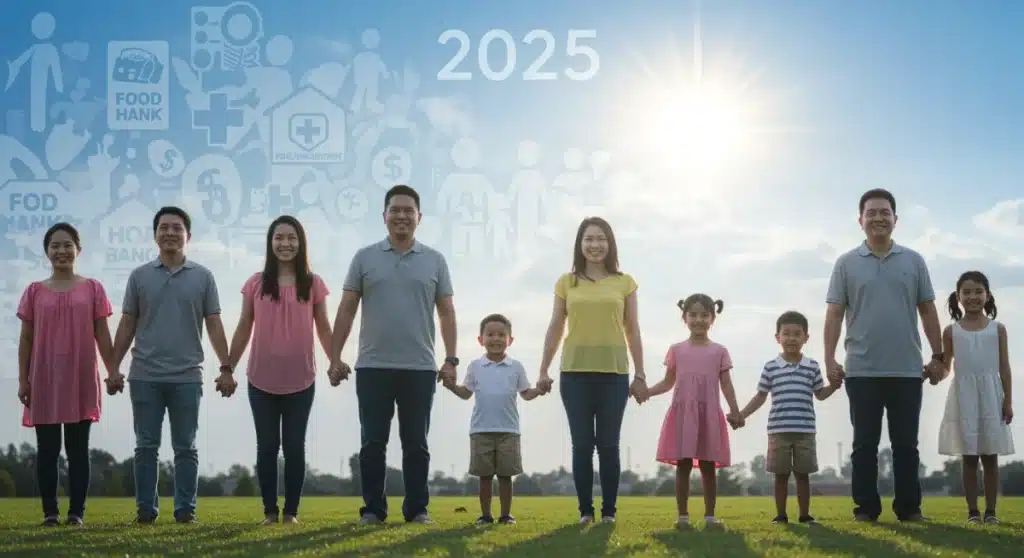
A comprehensive comparison of four leading national support networks for families in need in 2025 reveals distinct services and eligibility criteria essential for effective community resource utilization.
Navigating the landscape of assistance for families in need can be overwhelming, but understanding the key players is crucial. This national support networks spotlight for 2025 offers a critical comparison of four prominent organizations dedicated to aiding communities across the United States. We delve into their updated programs and how they continue to evolve to meet contemporary challenges.
Understanding the Landscape of Family Support in 2025
The year 2025 presents a dynamic environment for families seeking assistance, with economic shifts and evolving social needs influencing the types of support available. National support networks play a pivotal role in bridging gaps, offering everything from financial aid to educational resources and mental health services. These organizations often act as a lifeline, providing structured programs and advocacy for vulnerable populations.
It’s important for both families and community leaders to grasp the nuances of each network, as their offerings can differ significantly. By understanding their core missions and operational frameworks, individuals can make informed decisions about where to seek help and how to best utilize the resources at hand. Our analysis aims to demystify these complex systems, making them more accessible to those who need them most.
The Evolving Role of National Networks
National support networks are not static entities; they constantly adapt to societal changes and emerging needs. In recent years, many have expanded their digital presence, offering online applications, virtual counseling, and remote learning opportunities. This adaptability ensures that support remains accessible, even for families in remote areas or those facing transportation barriers.
- Increased focus on digital accessibility for all services.
- Integration of mental health support with traditional aid programs.
- Enhanced advocacy for policy changes benefiting families.
- Greater emphasis on sustainable long-term solutions, not just immediate relief.
The role of these networks extends beyond direct service provision. They often engage in significant research and policy advocacy, influencing legislation and shaping public discourse around family welfare. This dual approach of direct aid and systemic change makes them incredibly powerful forces in community development.
Ultimately, a comprehensive understanding of these networks is about empowering families with knowledge. Knowing what each organization offers, who they serve, and how to access their support is the first step toward building stronger, more resilient communities. This section sets the stage for a deeper dive into specific networks.
Network 1: The National Family Aid Foundation (NFAF)
The National Family Aid Foundation (NFAF) has long been a cornerstone of family support in the United States, known for its broad spectrum of services. In 2025, NFAF continues its legacy of providing critical assistance, with a renewed focus on holistic family well-being. Their programs are designed to address immediate needs while also fostering long-term stability and self-sufficiency.
NFAF’s approach is characterized by its extensive local chapter network, allowing for tailored support that respects regional differences and specific community requirements. This decentralized model enables them to be highly responsive to diverse populations, ensuring that aid reaches where it is most needed.
Core Programs and Services
NFAF offers a robust suite of services, updated for 2025 to include enhanced digital literacy programs and expanded mental health offerings. Their traditional pillars of support remain strong, providing a safety net for countless families.
- Emergency financial assistance for rent and utilities.
- Food security programs, including partnerships with local food banks.
- Educational support for children and adults, with a focus on vocational training.
- Mental health counseling and referral services, accessible virtually.
Beyond these direct services, NFAF is also deeply involved in community outreach and education, working to destigmatize seeking help and promoting preventative measures. They host workshops on financial planning, parenting skills, and navigating complex social service systems, empowering families with knowledge.
Eligibility and Accessibility
Eligibility for NFAF services typically depends on income guidelines, family size, and specific needs, often aligning with federal poverty levels. They strive to make their application process as straightforward as possible, with online portals and in-person assistance available at local chapters. The recent updates for 2025 include streamlined digital application forms and increased language support to ensure broader accessibility.
NFAF’s commitment to accessibility is evident in their efforts to reach underserved communities. They actively collaborate with other local organizations, schools, and faith-based groups to identify families who might otherwise fall through the cracks. This proactive engagement is a hallmark of their operation.
In conclusion, NFAF stands out for its comprehensive, community-centric approach to family support. Their 2025 updates reflect a dedication to evolving needs, making them a vital resource for families seeking both immediate relief and pathways to long-term stability.
Network 2: Families United for Tomorrow (FUT)
Families United for Tomorrow (FUT) distinguishes itself with a strong emphasis on empowering families through education and skill-building. While also providing essential direct aid, FUT’s primary mission for 2025 is to equip families with the tools necessary to break cycles of poverty and achieve sustainable independence. Their programs are meticulously designed to foster resilience and self-reliance.
FUT operates with a highly collaborative model, partnering with educational institutions, businesses, and local governments to create comprehensive support ecosystems. This network-centric approach ensures that families receive integrated services that address multiple aspects of their lives.
Educational and Vocational Pathways
A core component of FUT’s services in 2025 is their expanded vocational training and educational scholarship programs. They believe that investing in human capital is the most effective way to secure a brighter future for families.
- Scholarship programs for higher education and trade schools.
- Workforce development initiatives, including job placement assistance.
- Literacy and ESL (English as a Second Language) courses for adults.
- Youth mentorship programs focused on academic success and career exploration.
FUT’s educational initiatives are not just about formal schooling; they also include practical life skills workshops. These cover topics like budgeting, healthy eating, and navigating digital platforms, all aimed at enhancing a family’s overall capacity to thrive.
Community Engagement and Advocacy
Beyond education, FUT places a significant emphasis on community engagement. They organize regular forums and workshops to gather feedback from families, ensuring that their programs remain relevant and impactful. This direct line of communication helps FUT adapt its offerings to real-world needs.
In 2025, FUT has also intensified its advocacy efforts for policies that support equitable access to education and employment opportunities. They actively lobby for legislation that removes barriers to advancement for low-income families, demonstrating their commitment to systemic change.
FUT’s eligibility criteria focus on families demonstrating a commitment to self-improvement and educational advancement, alongside financial need. Their application process often includes an interview component to better understand a family’s goals and aspirations, ensuring a good fit with their empowerment-focused programs.
In summary, Families United for Tomorrow offers a unique blend of direct aid and empowering educational opportunities. Their 2025 updates reinforce their dedication to creating pathways out of poverty through skill development and strong community partnerships, making them an excellent choice for families seeking long-term growth.
Network 3: The Caring Hands Alliance (CHA)
The Caring Hands Alliance (CHA) stands out for its robust focus on emergency relief and immediate crisis intervention for families. In 2025, CHA continues to be a crucial first responder for families facing acute hardship, providing rapid assistance to stabilize situations and prevent further distress. Their operational model prioritizes speed and efficiency in delivering aid.
CHA has developed sophisticated logistical networks that allow them to deploy resources quickly during times of crisis, whether it’s a natural disaster or a sudden personal emergency. This agility makes them an indispensable part of the national support infrastructure.
Emergency Services and Rapid Response
CHA’s core services are centered around providing immediate necessities and support during urgent situations. Their 2025 enhancements include improved disaster preparedness protocols and expanded mobile units for on-site assistance.
- Temporary housing and shelter for displaced families.
- Distribution of emergency food, water, and essential supplies.
- Crisis counseling and trauma support services.
- Assistance with navigating immediate bureaucratic hurdles post-crisis.
Their rapid response teams are trained to assess needs quickly and connect families with the most appropriate resources, often working in conjunction with local emergency services. This coordinated effort ensures that families receive comprehensive support when they are most vulnerable.
Partnerships and Community Safety
CHA relies heavily on strong partnerships with local emergency management agencies, law enforcement, and other non-profit organizations. These collaborations are vital for effective crisis response and for ensuring a seamless transition from emergency aid to longer-term recovery efforts. Their 2025 strategy includes deepening these partnerships to create a more resilient national safety net.
Eligibility for CHA services is primarily based on the existence of an immediate crisis or emergency situation affecting a family’s basic needs. The application process is designed to be expedited, often requiring minimal documentation to ensure quick access to aid. They prioritize families who have experienced sudden and severe disruptions to their living situation.
In conclusion, The Caring Hands Alliance excels in providing rapid and effective emergency relief. Their 2025 updates demonstrate a continued commitment to being a reliable first line of defense for families in crisis, offering critical support when it’s most urgently needed.
Network 4: Community Empowerment Collective (CEC)
The Community Empowerment Collective (CEC) takes a distinct approach by focusing on grassroots community development and advocacy for systemic change. In 2025, CEC’s efforts are geared towards empowering communities to identify and address their unique challenges from within, rather than relying solely on external interventions. They believe in the power of collective action and local leadership.
CEC acts as a facilitator and resource provider for community-led initiatives, offering training, funding, and technical assistance to local groups. Their model emphasizes sustainability and building long-term capacity at the community level.
Grassroots Initiatives and Local Leadership
CEC’s programs are less about direct service provision and more about enabling communities to create their own solutions. Their 2025 focus includes expanding micro-grant programs and leadership development workshops for local organizers.
- Training programs for community leaders in grant writing and project management.
- Funding for local projects addressing issues like affordable housing and food deserts.
- Facilitation of community dialogues and planning sessions.
- Support for local advocacy groups working on policy reform.
The CEC model recognizes that every community has unique strengths and challenges. By empowering local residents to take ownership of their development, CEC helps foster sustainable change that truly reflects the needs and aspirations of the people.
Advocacy for Systemic Change
A significant part of CEC’s work involves advocating for broader systemic changes that benefit marginalized communities. They work to influence policy at state and national levels, addressing root causes of inequality rather than just symptoms. Their 2025 agenda includes pushing for reforms in zoning laws, educational funding, and access to healthcare.
Eligibility for CEC support is typically for community-based organizations or groups of residents with a clear plan for local improvement projects. The application process often involves submitting a detailed proposal and demonstrating community engagement. CEC seeks to partner with initiatives that have a strong potential for replicability and long-term impact.
In conclusion, the Community Empowerment Collective offers a powerful model for sustainable change by investing in local leadership and grassroots initiatives. Their 2025 updates underscore their commitment to fostering self-determination and advocating for systemic reforms that empower entire communities.
Comparing and Contrasting the National Support Networks
When looking at the four national support networks—National Family Aid Foundation (NFAF), Families United for Tomorrow (FUT), The Caring Hands Alliance (CHA), and Community Empowerment Collective (CEC)—it becomes clear that each serves a distinct, yet complementary, role in supporting families in need. Understanding these differences is key to identifying the most appropriate resource for any given situation in 2025.
NFAF offers a broad, general safety net with a wide array of direct services and local presence. Their strength lies in their comprehensive approach to immediate and medium-term family needs, making them a go-to for diverse forms of assistance. FUT, on the other hand, specializes in breaking cycles of poverty through education and skill-building, targeting families ready to invest in their long-term growth. CHA is the rapid response unit, excelling in emergency relief and crisis intervention, providing critical aid when time is of the essence. Finally, CEC empowers communities from the ground up, focusing on systemic change and local leadership development rather than direct individual services.
Key Differentiators and Overlapping Services
While their primary focuses differ, some services naturally overlap, creating a robust ecosystem of support. For instance, all networks in some capacity address food security, but their methods vary. NFAF might offer direct food assistance, FUT might include nutrition education in their programs, CHA provides emergency food during crises, and CEC might fund a community garden project.
- Scope of Services: NFAF (broad), FUT (education/empowerment), CHA (emergency), CEC (community-led systemic change).
- Target Audience: NFAF (general families in need), FUT (families seeking long-term independence), CHA (families in crisis), CEC (local community groups/leaders).
- Approach: NFAF (direct service delivery via chapters), FUT (partnerships for skill development), CHA (rapid deployment, crisis management), CEC (facilitation, funding for local initiatives).
- Long-Term Impact: All aim for long-term positive change, but through different pathways—NFAF through stability, FUT through self-sufficiency, CHA through recovery, and CEC through community resilience.
The updates for 2025 across these networks often reflect a move towards greater digital integration and a more holistic view of family well-being, incorporating mental health and digital literacy into their offerings. This convergence indicates a shared understanding of the multifaceted nature of modern family challenges.
Choosing the right network depends entirely on a family’s specific situation and needs. A family facing immediate homelessness might turn to CHA, while a family looking to improve their job prospects would find FUT more aligned with their goals. For general support, NFAF remains a strong option, and for those passionate about local change, CEC offers unique opportunities.
Understanding these distinctions allows for more strategic resource navigation, ensuring that families receive the most effective and appropriate assistance available in 2025. This comparative analysis highlights the rich diversity and critical importance of these national support networks.
| Network | Primary Focus |
|---|---|
| National Family Aid Foundation (NFAF) | Broad direct services, local chapter support, overall family well-being. |
| Families United for Tomorrow (FUT) | Education, vocational training, skill-building for long-term independence. |
| The Caring Hands Alliance (CHA) | Emergency relief, rapid crisis intervention, immediate needs assistance. |
| Community Empowerment Collective (CEC) | Grassroots community development, local leadership, systemic advocacy. |
Frequently Asked Questions About Family Support Networks
Identifying the best network depends on your specific situation. If you need immediate crisis aid, The Caring Hands Alliance (CHA) is suitable. For long-term education and skill development, Families United for Tomorrow (FUT) is ideal. For general assistance, the National Family Aid Foundation (NFAF) offers broad services. If you’re looking to empower your local community, consider the Community Empowerment Collective (CEC).
No, eligibility requirements vary significantly by network. NFAF and FUT often use income guidelines and family size. CHA prioritizes immediate crisis situations. CEC typically supports community groups or initiatives rather than individual families directly. Always check the specific criteria for each organization on their official websites or by contacting their local offices.
In 2025, many networks have enhanced their digital services, offering online applications, virtual counseling, and remote learning programs. They’ve also expanded their focus to include mental health support and digital literacy. Adaptations aim to improve accessibility, streamline processes, and address evolving societal needs more effectively.
Absolutely! All four networks welcome volunteers and donations. NFAF and CHA often seek volunteers for direct service and disaster relief. FUT benefits from mentors and educational support. CEC looks for individuals passionate about community organizing. Check their respective websites for specific volunteer opportunities and donation methods to support their vital work.
While financial assistance is a component for some, these networks offer a broader range of support. NFAF provides emergency aid, food security, and educational help. FUT focuses on vocational training and scholarships. CHA specializes in crisis intervention, and CEC empowers communities through local projects. Their services extend far beyond just monetary aid.
Conclusion
The landscape of national support networks for families in need in 2025 is rich and diverse, offering a spectrum of services designed to address various challenges. From the comprehensive direct aid provided by the National Family Aid Foundation to the empowering educational pathways of Families United for Tomorrow, the rapid crisis intervention of The Caring Hands Alliance, and the grassroots community development fostered by the Community Empowerment Collective, each organization plays a critical role. Understanding their distinct missions, updated programs, and eligibility criteria is essential for families seeking assistance and for communities striving to build resilience. By effectively navigating these resources, we can ensure that help reaches those who need it most, paving the way for stronger, more stable futures across the nation.